Category Archives: Advent Reflections

Thursday, December 4

Thursday, December 4
First Week of Advent

O come, O Bright and Morning Star.

“O come, O Bright and Morning Star,” we sing. Dispel the shadows of the
night and turn our darkness into light. What does it mean to turn to Christ
as our Morning Star—as the source of our light and heat and life itself?
Gloom covers us when we have no hope for our futures, when we
dread night’s shadows. Every reminder of our mortality—whether it’s
watching a loved one suffer illness or our own aching back or failing eye-
sight—raises the specter of eventual death. So we avoid it—we scramble
back into the shadows where we don’t have to face it or think about it. But
God came to walk us through that darkness into the light of eternal life. We don’t have to live in darkness—we can choose to live in the light.

Prayer for Morning
Jesus, you are the Light of the World. You came to share our humanity, even
to the point of death, to reveal the Father’s radical communion with us.
Give me the courage to face the shadows in my life with the light of your love. O Morning Star, bring your warmth and heat to me today.

Ponder Today
What will remind me of my mortality today? How will I respond?

Prayer for Evening
Jesus, my brother, your light shines even in my deepest anxieties. Help
me to embrace life with you as my salvation and chase away my gloom. O
Bright and Morning Star, I look for your light.

Wednesday, December 3

Wednesday, December 3
First Week of Advent

O come, O Wisdom from on high, who ordered all things mightily;
to us the path of knowledge show and teach us in its ways to go.

The trees of a forest communicate with one another through the fungi that
share a symbiotic relationship with their roots. Trees share nutrients and
information through this network of fungi to defend against parasites.
From the spinning galaxies to the invisible workings of the human
heart, things are ordered. Wisdom is simply the right perception of this
order—living in accord with it brings us harmony and purpose. We believe
Jesus comes to us in the form of this wisdom; with this hymn we call to
him, “O come, O Wisdom from on high, who ordered all things mightily;
to us the path of knowledge show and teach us in its ways to go.”

Prayer for Morning
Jesus, Wisdom of God, all things came to be through you and reflect your
glory. Help me to seek your truth as a guide for my life—there to find the
right way to live in your abiding presence. Wisdom of God, order my life according to your truth today.

Ponder Today
What is a belief you would stake your life on? How can that conviction
shape your day?

Prayer for Evening
Jesus, you are the Way, the Truth, and the Life. You open a new horizon—one that draws me beyond myself into abundant peace. Grant me the courage to follow your truth, especially when it leads me. Wisdom of God, show me your way

Tuesday, December 2

Tuesday, December 2
First Week of Advent

Rejoice! Rejoice! Emmanuel shall come to you, O Israel.

Look at the lyrics of this week’s hymn on page 46 and notice how this hymn
is structured around a repeated call and response. With each verse, we call
out for Jesus under a different title to come shape our lives—to ransom us
who mourn in exile, save us from depths of hell, and give us victory over the grave. We plead, dispel the shadows of the night. Each verse is a new call for help: the words create space for us to express our own particular yearnings for God. Each is met by the unchanging refrain, seemingly uttered in another voice. Rejoice! Rejoice! Emmanuel shall come to you. This steady confidence is the faith carried to us by generations, those who tested life and found this hope to be honest and true. Across generations, believers have known that God is faithful and they urge us, Rejoice!

Prayer for Morning
Emmanuel, you come to bring us to our Father. Help me overcome division that weighs on my heart and form me to love as you love. Grant me
confidence in your desire to come and shape my life. Jesus, I wait with
ready joy for your coming.

Ponder Today
What signs do I expect will reveal Jesus’s presence and lead me to rejoice Today?

Prayer for Evening
Emmanuel, the gift of faith is handed on to us by generations of people
who have known, loved, and served you. Help me to trust their experience
of your love and, with them, follow you on our way to our heavenly home.
O Lord, when I call, you respond.


Monday, December 1

Monday, December 1
First Week of Advent

O come, O come, Emmanuel.

We repeat a phrase over and over in this hymn: “O come!” It might seem an odd invocation when we are preparing for a Christmas celebration of Jesus’s birth at Bethlehem so very long ago. Jesus, the Christ, has already come into our world as one of us, so what are we really praying for in this song? “O come” is a phrase that can carry our prayer today. Yes, Jesus has already come—and remains with us here and now. But this is our moment to invite him in deeper. “O come” is not a passive invitation—it is the pleading, welcoming command you give a loved one who stands outside your door. Our Advent journey is intended to stir up our desire to plead “O come, O come, Emmanuel!” and mean it because we long for him in every part of our lives.

Prayer for Morning
Jesus, you know and love me better than I do. It is so easy to forget this, however, and my inattentiveness means I often do not recognize you in the ordinary things of daily life. Stir up in me a desire for greater union with you. Son of God, I open my heart, my mind, and all my senses to you.

Ponder Today
Repeat the prayer “O come, O come, Emmanuel” today, especially when- ever you run into a challenge or a stressor appears.

Prayer for Evening
Jesus, you are God’s presence within and all around me. Help me walk with you through this Advent so I may grow in your love for me and learn to love you more fully in return. Son of God, deepen my faith and love.

First Sunday of Advent

Sunday, November 30
First Week of Advent

O come, O come, Emmanuel, and ransom captive Israel that mourns in lonely exile here until the Son of God appears.

Somehow stepping into this four-week season often brings a small jolt of
panic. Perhaps it’s because we are thinking about everything we need to
get done between now and December 25. The clock has officially started.

“O Come, O Come, Emmanuel” is the perfect antidote to the adrenaline spike
and often-frantic hurry of this season. The pace is slow and
deliberate—there’s no way to rush through this ancient song. It forces us
to be still for a few minutes and contemplate our own lonely exile. What keeps us captive? And why?

Prayer for Morning
Jesus, Emmanuel—your name means “God is with us.” You share our
humanity. Help me to see the ways you come to me—not in the abstract
but in the real circumstances in my life today. Open my eyes and my heart
to welcome you to the people and events that come into my life this day.

Ponder Today
Christ came to ransom us. What keeps my spirit captive? From what do
I seek ransom?

Prayer for Evening
Jesus, Emmanuel, you come to me here and now. You are not waiting for
me to get my act together or to prove that I’m worthy of you. You arrive
in the midst of my mess and my to-do list and my regrets, for you want to
share life with me. Open my eyes and heart to receive your gifts, O Lord,
especially when I don’t feel ready for you.

Advent 2025

Welcome! Advent Reflections for this Season will begin on Sunday, November 30, 2025 at 12:01 am. Reflections will post daily.

The reflections are from Let Heaven and Nature Sing – Daily Prayers for Advent and Christmas. Written by Josh Noem.  And our partnership with Ave Maria Press.

Fourth Sunday of Advent

The Lord Is with you

Opening Prayer

Thank you, Lord, for your will. Thank you for teaching us to trusyou in all things. No matter how hard it may be some days, please continue to give us the faith to believe in your will as supreme for our lives. Amen.

First Reading: 2 Samuel 7:1–5, 8b–12, 14a, 16
Responsorial Psalm: Psalm 89:2–3, 4–5, 27, 29
Second Reading: Romans 16:25–27
Gospel: Luke 1:26–38

Challenge for the Week

At the beginning of each day this week, offer this simple prayer with your whole heart: “May it be done according to your word.” In the evenings, take time to reflect on how that experience of offering your entire day went. Was it easy to offer your day to the Lord? Did
you forget? Did it change how you viewed the actions and events of your day? Each night, use these questions to spark a conversation with the Lord.

Journal

1. When is it especially hard to trust God’s plan for you? Why?
2. We are reminded at every Mass that the Lord is with us. When
is it hard to recognize that this is true? When is it easy?
3. How can you remind yourself of his profound presence in your
daily life?

Beyond Words

Imagine you are watching television and images of starving children come onto the screen. You are moved with pity and immediately decide to quit school or work to serve only the poorest, starving children. Everyone would praise you for such a noble sacrifice! You arrive at your new home and, after a short time, realize you weren’t built for a third world country, you don’t understand the culture or the language, and you are painfully homesick. Would you be angry with God for not blessing your spontaneous mission?

This analogy is imperfect, but it serves to make a point. If God calls you to a foreign mission field, he will also equip you with the desire, temperament, ability, knowledge, and passion to fulfill that vocation. If he doesn’t bless a mission of our own making, we can’t
get annoyed with him; he didn’t ask for the mission to begin with.

In this week’s first reading, King David sets out to do something amazing for God. The Lord has been dwelling in a tent for decades, and now David wants to rightfully honor the Lord. Before he can lay the first stone in a majestic temple, however, God teaches the powerful king a lesson.

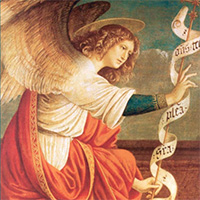
God already had a plan for a perfect, everlasting temple and dwelling place not a house made by David but a new temple named Mary, wed to a man “from the house of David.” God’s plan, as St. Paul tells us in the second reading, was not reactionary; this plan was a “revelation of the mystery kept secret for long ages.” God did not need David’s favors, only his obedience. In this way, Mary’s response to the angel is the perfect prayer: “May it be done to me according to your word.” If you really want to please God, don’t tell God what you’re going to do for him; ask what he desires for you.

Related Fact

We hear that King David’s palace is “a house of cedar.” Cedar was the highest-quality wood available and the material of choice for royalty and builders alike. Cedarwood was free of knots, was incredibly durable, and gave off an aroma that eliminated the need for air fresheners (which wouldn’t be invented for another millennium or two). Cedar also repelled insects with its smell and taste. It was resistant to the fungus and disease that left other types of wood rotting after only a few years, thus saving money on both exterminators and future remodels.

Behind the Scenes

The phrase “The Lord is with you” is not just a blessing. Many times, when we hear the promise that God’s divine presence will be with a person, danger follows. Before Moses takes on the mighty Pharaoh, God promises, “I will be with you” (Ex 3:12). As Joshua leads the Israelites into the battle of Jericho, God again promises, “I will be with you” (Jos 1:5). When Gideon takes on the Midianites and Amalekites, an angel promises him, “The Lord is with you” (Jgs 6:12). When David prepares to fight Goliath on an apparent suicide mission, King Saul utters, “The Lord be with you” (1 Sm 17:37). When the appointed time had come, the God of the universe sent an angel to a virgin in Nazareth. The angel greeted the handmaiden with the phrase, “The Lord is with you.”

Today, at four points within every single Mass, the priest utters this blessing/warning to us, the modern faithful, to remind us of God’s presence and of the beautiful danger and mystery of the Mass we are about to take part in and the world we are about to enter back into.

Word Play

The word handmaid used by Mary in St. Luke’s gospel is powerful on
many levels. From the Greek and, later, Old English, a handmaid is simply a female servant. Mary’s decision and consent to become the Mother of God is overshadowed not only by the Holy Spirit but also by her immense humility, recognizing and professing that, although she has been picked by God for this unfathomable honor, she is but a humble servant.

This excerpt from One Sunday at a Time: Preparing Your Heart for Weekly Mass (Cycle B) is reprinted with permission of Ave Maria Press.

Behind the Scenes

The Holy Spirit is mysterious. Much like the wind, while the Holy Spirit cannot be physically “seen,” we can see the Holy Spirit’s power, effect, and presence in the world around us. Still, when we read St.Paul’s writings, we see that the early church’s comprehension and understanding of the Holy Spirit, his role, and his ultimate power are still being worked out by most.

This second reading, to the church in Thessalonica, is a perfect example. St. Paul uses the phrase “do not quench the Spirit,” but what does that mean exactly? Well, as is often the case in scripture, the answer lies in the verses that immediately precede and follow. If we
“pray without ceasing,” we will constantly be aware of the presence and movement of the Holy Spirit around us. Discernment becomes far easier if we are always looking for ways and places where the Spirit may be guiding us or speaking to us. If we “test everything,” it means we are discerning the situations before us to see if they fall in line with the gospel teachings. By retaining “what is good,” we ensure that we are living in line with the will of God for us and not being led astray by our own sinful inclinations or the enemy himself.

In his Commentary on St. Paul’s First Letter to the Thessalonians, St. Thomas Aquinas further explains that when we do not discern through the Spirit’s guidance, if we fail to use our God-given gifts to achieve his will, or if we otherwise impede the movement of the
Holy Spirit in our lives or the lives of others, we have then quenched the Spirit.

This excerpt from One Sunday at a Time: Preparing Your Heart for Weekly Mass (Cycle B) is reprinted with permission of Ave Maria Press.

Related Fact

This week’s responsorial psalm is not actually from Psalms but from the Gospel of Luke. Mary’s utterance—the Magnificat—is known as a canticle, which is a hymn or chant (usually from scripture) that acts as a song of praise. Very rarely does the responsorial psalm at Mass (which follows the first reading) ever come from a book other than Psalms.

This excerpt from One Sunday at a Time: Preparing Your Heart for Weekly Mass (Cycle B) is reprinted with permission of Ave Maria Press.